
Optimize Warehouse Space: A Guide to Efficient Racking System
From optimizing pallet storage and implementing high-density solutions to considering the load capacity of individual racks and employing advanced material handling technologies, strategically planning racking is critical for businesses of all sizes. This guide explores various racking systems and best practices to help you make your warehouse an efficient and organized space.
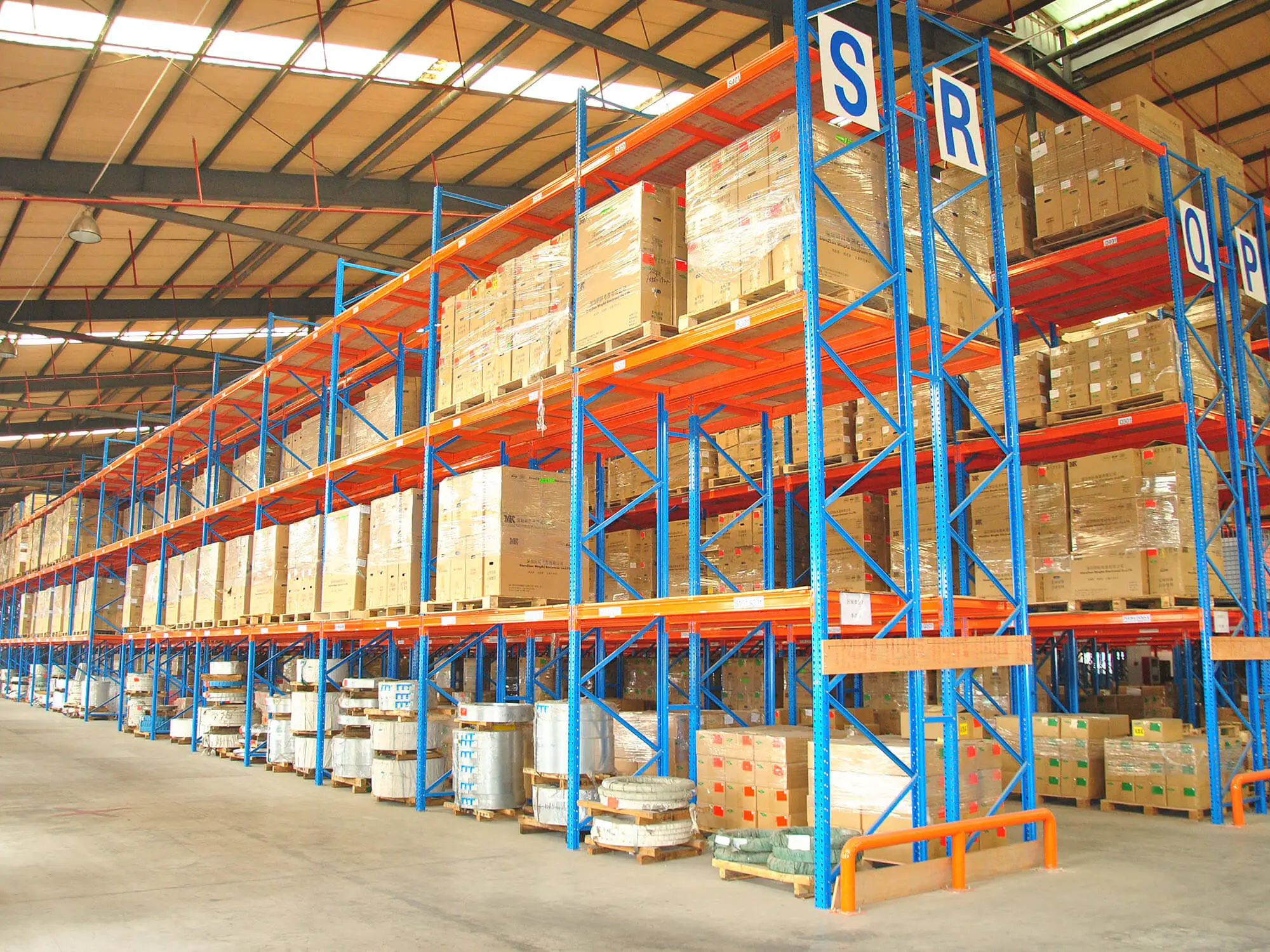
Understanding the Basics: Types and Functions of Warehouse Racking Systems
Warehouse racking systems are crucial for optimizing space and improving efficiency in storage facilities. Selecting the right type depends on factors like inventory turnover, space constraints, and budget.
1. Selective Pallet Racking
Selective pallet racking is the most common type, offering direct access to every pallet. This makes it ideal for warehouses with a wide variety of products and relatively low density storage needs. Its simplicity translates to lower upfront costs, but it might not be the most efficient use of space for high-volume operations. Consider this option when accessibility is paramount.
2. Drive-In/Drive-Thru Racking
Drive-in and drive-thru racking systems are designed for high-density storage of similar products. Drive-in racking allows forklifts to enter from one side, while drive-thru racking allows access from both ends. This reduces the number of aisles needed, maximizing storage capacity. However, it operates on a last-in, first-out (LIFO) or first-in, first-out (FIFO) basis, respectively, which may not be suitable for perishable goods.
3. Cantilever Racking
Cantilever racking is specifically designed for storing long, bulky items like lumber, pipes, and furniture. It features arms extending from vertical columns, eliminating the need for front columns and providing unobstructed access. This type of racking is highly adaptable to different lengths and weights, making it a versatile solution for specialized storage needs.
Designing Efficient Layouts for Maximum Space Utilization
1. Understanding Space Dimensions
Accurately measuring the warehouse's dimensions, including ceiling height and column spacing, is the first step. These measurements determine the maximum rack height and aisle width. Consider the turning radius of forklifts and other material handling equipment when planning aisle widths. A detailed floor plan helps visualize the layout and identify potential obstacles. Optimizing vertical space by utilizing taller racking systems can significantly increase storage capacity.
2. Optimizing Aisle Widths
Aisle width directly impacts storage density and accessibility. Wider aisles provide easier maneuverability for forklifts, leading to faster retrieval times. However, wider aisles reduce the amount of space available for racking. Narrow aisle racking systems, requiring specialized equipment, can increase storage density but may slow down retrieval operations. Balancing accessibility and storage density is crucial for efficient warehouse operations.
3. Implementing ABC Analysis
ABC analysis classifies inventory based on its value and movement frequency. "A" items are high-value, fast-moving goods that should be placed in easily accessible locations near shipping areas. "B" items are moderately valuable and move at an average pace, while "C" items are low-value and slow-moving. Strategically placing items based on their ABC classification minimizes travel time and improves order fulfillment efficiency.
Innovative High-Density and Mobile Racking Solutions
These solutions maximize storage space utilization, offering efficient alternatives to conventional racking systems and adapting to dynamic warehouse needs.
1. High-Density Racking Systems
High-density racking systems, like push-back and pallet flow racks, offer a compact storage solution by reducing aisle space. Push-back racks allow pallets to be stored several deep, accessed from a single aisle, while pallet flow racks use gravity to move pallets from the loading to the picking face. These systems are ideal for industries needing to store large quantities of similar items, increasing storage density and throughput efficiency.
2. Mobile Racking Systems
Mobile racking, also known as powered mobile racking, involves mounting conventional racking onto mobile bases that move on rails. This eliminates the need for multiple access aisles, creating a high-density storage block. Aisles are opened only when and where needed, providing direct access to specific pallets. Mobile racking is particularly useful in cold storage facilities, where minimizing the refrigerated volume is crucial for energy efficiency.
3. Automated Storage and Retrieval Systems (AS/RS) Integration
Integrating high-density and mobile racking with Automated Storage and Retrieval Systems (AS/RS) further optimizes warehouse operations. AS/RS uses automated cranes or shuttles to quickly and accurately store and retrieve items, improving throughput and reducing labor costs. This combination is especially effective in large distribution centers requiring rapid order fulfillment and precise inventory management.
Safety Considerations in Cold Storage and Heavy Load Handling
Cold storage and heavy load handling in warehouses present unique safety challenges that demand careful consideration and proactive measures to protect workers and prevent accidents.
| Safety Aspect | Cold Storage | Heavy Load Handling |
|---|---|---|
| Temperature Exposure | Potential for hypothermia, frostbite | N/A |
| Reduced Visibility | Condensation, fog, ice buildup | Obstructions from large items |
| Slippery Surfaces | Ice accumulation on floors | Potential for unstable loads |
| Equipment Performance | Battery life reduction in forklifts | Increased stress on equipment and racking systems |
| Training and Awareness | Specific protocols for cold environments | Proper lifting techniques and equipment operation |
| Personal Protective Equipment (PPE) | Insulated clothing, gloves, headwear | Steel-toed boots, gloves, high-visibility vests |
Data Source: Occupational Safety and Health Administration (OSHA) Guidelines, 2024.
1. Addressing Temperature Extremes
Working in cold storage environments exposes employees to the risk of hypothermia and frostbite. To mitigate these risks, employers must provide appropriate insulated clothing, including gloves, hats, and thermal socks. Work schedules should incorporate regular breaks in warmer areas to allow employees to rewarm and prevent prolonged exposure. Additionally, proper training on recognizing the symptoms of cold-related illnesses is crucial. Implementing a buddy system can further enhance safety by ensuring that workers monitor each other for signs of distress. Regular temperature monitoring and adjustments to work practices based on temperature fluctuations are also essential.
2. Ensuring Visibility and Navigation
Reduced visibility due to condensation, fog, and ice buildup is a common hazard in cold storage facilities. Adequate lighting is paramount to ensure clear visibility throughout the warehouse. Regular cleaning and defrosting of surfaces can minimize ice accumulation. Forklifts and other material handling equipment should be equipped with functioning lights and audible warning devices. Clear and well-maintained pathways are necessary for safe navigation. Furthermore, employees should be trained on how to navigate safely in low-visibility conditions, including using caution and reducing speed.
3. Managing Slippery Surfaces
Ice accumulation on floors creates a significant slip and fall hazard in cold storage warehouses. Implementing a robust floor maintenance program that includes regular cleaning and de-icing is essential. Using anti-slip mats or coatings on walkways and high-traffic areas can further improve traction. Employees should wear slip-resistant footwear to minimize the risk of falls. Promptly addressing any spills or leaks that could contribute to ice formation is also crucial. Regular inspections to identify and address potential slip hazards are necessary to maintain a safe working environment.
Integrating Technology: The Role of Data Analytics in Racking Systems
Data analytics is revolutionizing warehouse management, offering insights that optimize racking systems for efficiency and cost-effectiveness. By leveraging data, businesses can make informed decisions about space utilization and inventory management.
1. Predictive Maintenance and Downtime Reduction
Data analytics can predict potential equipment failures within racking systems. Sensors monitor stress levels, usage patterns, and environmental factors, feeding data into algorithms that identify anomalies. This allows for proactive maintenance, minimizing unexpected downtime and extending the lifespan of racking components.
2. Optimizing Space Utilization
Analyzing data on inventory turnover, product dimensions, and storage requirements allows for the strategic placement of goods within the racking system. Data analytics tools can identify underutilized areas and suggest optimal configurations for maximizing storage density. For instance, ABC analysis, powered by real-time sales data, ensures that frequently accessed items are positioned for faster retrieval, improving order fulfillment times.
3. Enhancing Inventory Management
Data analytics provides real-time visibility into inventory levels, location, and movement within the racking system. This enables accurate tracking of stock, reduces the risk of stockouts or overstocking, and improves overall inventory accuracy. Advanced analytics can also forecast demand patterns, allowing businesses to adjust inventory levels proactively and optimize storage allocation.
Future Trends in Warehouse Management and Storage Solutions
1. Automation and Robotics
The integration of automation and robotics is revolutionizing warehouse operations. Automated Guided Vehicles (AGVs) and Autonomous Mobile Robots (AMRs) are increasingly used for material handling, reducing labor costs and improving efficiency. Automated Storage and Retrieval Systems (AS/RS) optimize space utilization and accelerate order fulfillment. These technologies enhance accuracy and speed, enabling warehouses to handle higher volumes with fewer errors. The adoption of robotics also improves safety by automating tasks that are hazardous for human workers. As technology advances, the initial investment costs are decreasing, making automation more accessible to smaller warehouses.
2. Artificial Intelligence (AI) and Machine Learning (ML)
AI and ML are transforming warehouse management by providing advanced capabilities for forecasting, inventory optimization, and route planning. AI algorithms analyze vast amounts of data to predict demand fluctuations, allowing warehouses to proactively adjust inventory levels and minimize stockouts or overstocking. Machine learning optimizes warehouse layouts and picking routes, reducing travel time and improving order fulfillment speed. These technologies also enable predictive maintenance of equipment, minimizing downtime and extending the lifespan of warehouse assets. The insights provided by AI and ML empower warehouse managers to make data-driven decisions, improving overall operational efficiency.
3. Cloud-Based Warehouse Management Systems (WMS)
Cloud-based WMS are gaining popularity due to their scalability, accessibility, and cost-effectiveness. These systems provide real-time visibility into inventory levels, order status, and warehouse operations from any location. Cloud-based WMS eliminate the need for expensive on-premises infrastructure, reducing IT costs and simplifying system maintenance. They also facilitate seamless integration with other supply chain systems, such as transportation management systems (TMS) and enterprise resource planning (ERP) systems. This integration enables end-to-end visibility and collaboration across the entire supply chain, improving responsiveness and agility.
Q&A
Question 1: What are the primary factors influencing the choice of a warehouse racking system?
Answer: The selection of a warehouse racking system depends on several key factors: inventory turnover rate (how quickly products move), available space constraints within the warehouse, and the budget allocated for the system's purchase and installation. These factors help determine which type of racking (selective, drive-in/drive-thru, cantilever, pallet flow, etc.) best suits the specific needs of the warehouse.
Question 2: What are the advantages and disadvantages of drive-in/drive-thru racking systems?
Answer: Drive-in/drive-thru racking systems offer high-density storage, ideal for similar products, and minimize aisle space. Drive-in allows access from one side (LIFO), while drive-thru allows access from both (FIFO). However, this method isn't suitable for perishable goods due to the inherent first-in, last-out or first-in, first-out nature of the systems.
Question 3: How does ABC analysis improve warehouse efficiency?
Answer: ABC analysis categorizes inventory into A (high-value, fast-moving), B (moderate value, average movement), and C (low-value, slow-moving) items. Placing "A" items in easily accessible locations near shipping areas minimizes travel time for frequent orders, directly improving order fulfillment efficiency and reducing operational costs.
Question 4: What safety precautions are crucial in cold storage warehouse environments?
Answer: Cold storage presents unique hazards. Employers must provide insulated clothing to prevent hypothermia and frostbite. Adequate lighting combats reduced visibility from condensation and ice. Regular cleaning prevents slippery surfaces, and slip-resistant footwear is essential. Regular equipment maintenance, especially for forklifts, is crucial due to the impact of cold temperatures on battery life and other components.
References:
- https://www.bignewsnetwork.com/news/278435699/why-choose-godrej-electric-stackers-over-manual-pallet-trucks
- https://www.hitachienergy.com/in/en/about-us/hitachi-energy-india
- https://www.imarcgroup.com/insight/logistics-industry
- https://clutch.co/it-services/analytics/financial
- https://www.rospa.com/health-and-safety-awards/rospa-health-and-safety-awards/gold-awards-2025